There will be meteorite fireworks in the sky on the night of May 30 and 31, these scenes will not be seen in India: NASA
New delhi date. Monday 30 May 2022
The space is so large that the less you know about it, the less you know. Some agencies around the world are working on the first solution to this problem. Now, once again, NASA claims that on the night of May 30 and 31, there will be fireworks in the sky that have not happened for the last 20 years. The fireworks are to be caused by a comet.
Tau Hercules meteor shower
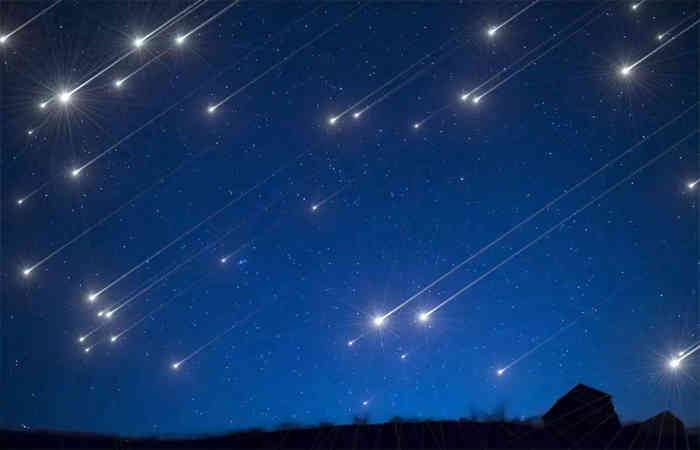
The US space agency NASA has informed that the rain of Tau Hercules meteorite is going to fall on our planet i.e. Earth on May 30 and 31. NASA said that for the first time in the last 20 years, glowing fireworks could be seen in the celestial meteorite.
Why would these fireworks in the sky
The meteor shower is expected to be caused by a comet in the sky. The name of this comet is SW-3. This is an object made of ice and dust. This usually revolves around the sun. Whenever a comet of this type comes very close to the orbit of the earth, our gravitational force starts coming towards their small pieces towards our earth but when these pieces come into the earth's atmosphere it starts burning due to friction and this gives a huge glow in the sky.
The SW-3 had been missing for many years
The comet is not new but was identified by two German astronomers a century ago. It is named SW-3 after him. The comet orbits the Sun once every 5.4 years but it mysteriously disappeared for 40 years. According to the information received, it was seen 8 times in a century between 1935 and 1974. It reappeared in March 1979, followed by 1995, and now the 600 is much brighter.
Rain of 1000 meteorites
NASA said that 1000 meteorites are expected to fall every hour on the night of May 31, but it is also possible that if the rate of separation of comet debris slows down, there will be no bright rain.
There will be no sightings in India
But sadly, the spectacle of these fireworks will not be seen in India, as according to NASA, the meteorite will land on Earth at 10:30 a.m. Indian time on Tuesday. This means that Indians will not be able to enjoy this view in broad daylight. However, residents of the United States, Canada, Mexico and Latin America will be able to see the meteor shower.


Comments
Post a Comment